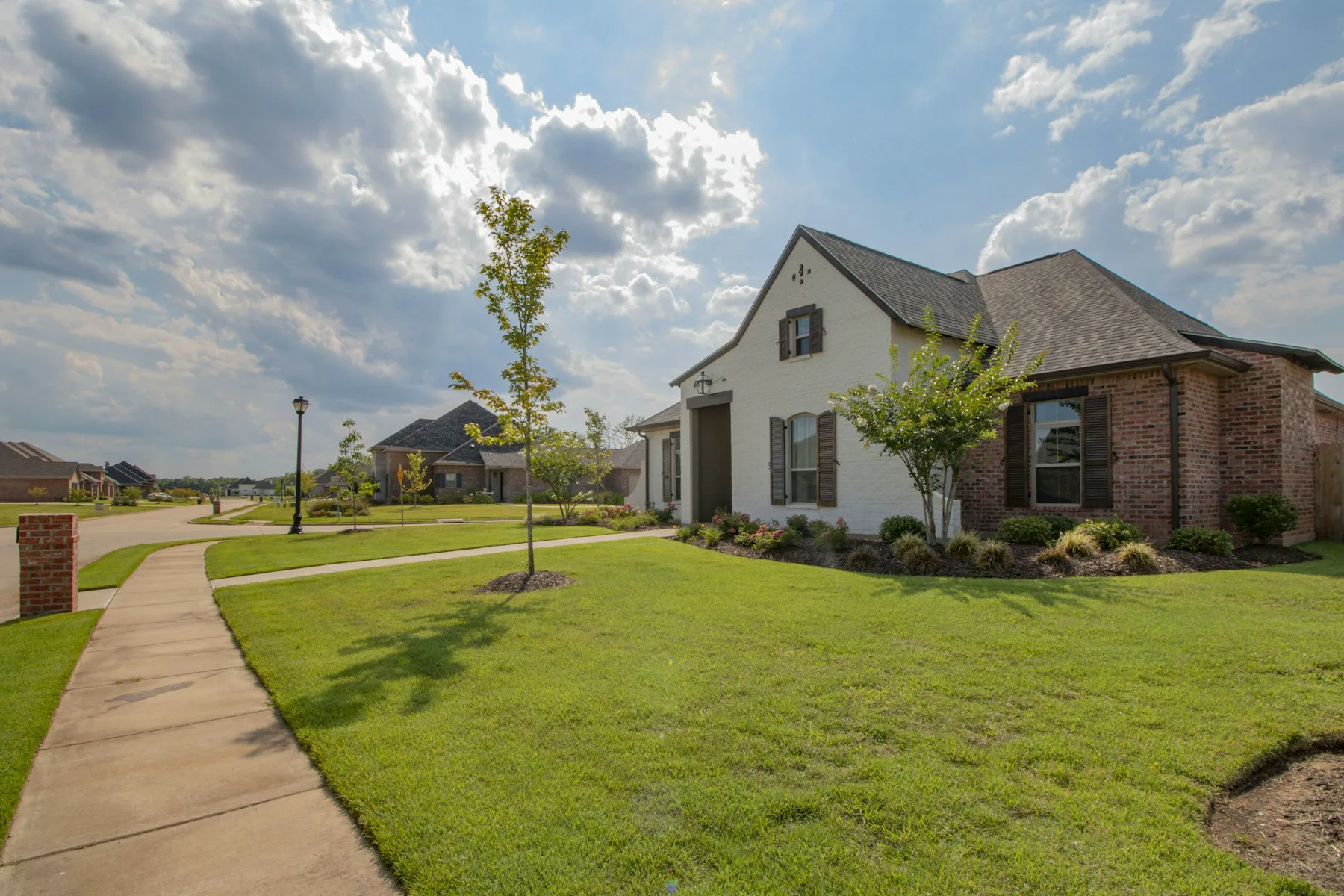


Much of Fort Bend County’s growth has happened in master-planned communities outside city limits. Someone had to pay for the water lines, sewers, drainage and levees that made those neighborhoods possible—and in many cases, that cost shows up on the homeowner’s tax bill through a special district.
What’s on a Fort Bend tax bill
The Fort Bend Central Appraisal District (FBCAD) sets each property’s value. It does not set tax rates. Each taxing unit sets its own rate per $100 of value, and your bill adds them together. A typical bill can include:
- Fort Bend County and the county drainage district
- Your school district
- A city, if the home is inside city limits
- A municipal utility district (MUD), levee improvement district (LID) or other special district
- A public improvement district (PID) assessment, in some communities
MUDs: paying for water, sewer and drainage
A MUD builds water, sewer and drainage systems for areas outside city utility service. It usually pays for them with bonds, and homeowners repay those bonds through a property tax. A MUD’s rate typically has two parts: one to repay the bonds and one for operations and maintenance. Some MUDs also fund parks and trails.
A MUD rate can go down as a community builds out and values rise, but that is not guaranteed. A district can also issue new bonds, and the rate can go up.
Levee improvement districts
Fort Bend sits along the Brazos River, and many neighborhoods are protected by levees. Levee improvement districts maintain those levees and drainage channels and are funded by local property taxes. Some homes are in both a MUD and an LID, and each one adds its own rate.
PIDs: an assessment, not just a rate
A public improvement district pays for improvements such as roads, landscaping or amenities through an assessment on each property. Some PIDs bill an annual installment for a set number of years. Terms vary from one district to the next, so read the PID notice and ask how much remains and for how long.
The notices sellers must give
Texas requires a seller to give the buyer a written notice when a property is in a MUD or similar district. The notice states the district’s tax rate and bond information. If the buyer signs the contract without receiving it, the buyer can generally end the contract. A separate notice is required for homes in a PID.
The Texas Real Estate Commission publishes a form for this, the Notice to Purchaser of Special Taxing or Assessment District. Read it before you sign, not at the closing table.
What the difference can look like
Here is an example with round numbers. Two $450,000 homes a few miles apart, one with a combined rate of $2.20 per $100 and one with $2.90. Before exemptions, the first bill is about $9,900 a year and the second about $13,050. That is about $3,150 a year, or roughly $263 a month, for homes at the same price.
These are illustrations, not actual rates. Exemptions, values and rates change every year, so check the real address.
See how taxes change a paymentHow to look up a home’s total rate
- FBCAD property search: shows the property’s value and the taxing units it belongs to.
- Fort Bend County Tax Assessor-Collector: shows current tax rates and recent bills.
- The district’s website: many MUDs must post their notice to purchasers online.
- The seller’s notices: the MUD and PID notices in your contract paperwork.
This article is general information about real estate in Greater Houston and is subject to change. It is not legal, tax, financial or lending advice; confirm details for your situation with qualified professionals.